
Review: Platinum PTL-5000a fountain pen
The Platinum PTL-5000a makes an interesting promise: a 14k gold nib at a price that undercuts almost everything else on the market. I borrowed one from a friend to find out if the gold actually changes anything - testing it for both writing and drawing, which is how I use all my pens. The honest answer is more nuanced than the price tag suggests.
A 14k gold nib for under a hundred euros - that's the pitch. When my friend Johan offered to lend me his Platinum PTL-5000a, I was curious enough to say yes. I'd had good experiences with Platinum before, and a gold nib at this price point seemed worth investigating. The question I kept coming back to: does the gold actually matter?
Worth noting before we go further - Platinum discontinued the PTL-5000a in July 2019. If you want one, you're looking at the secondhand market. They're not hard to find, and prices are reasonable, but you won't get it new.
My perspective
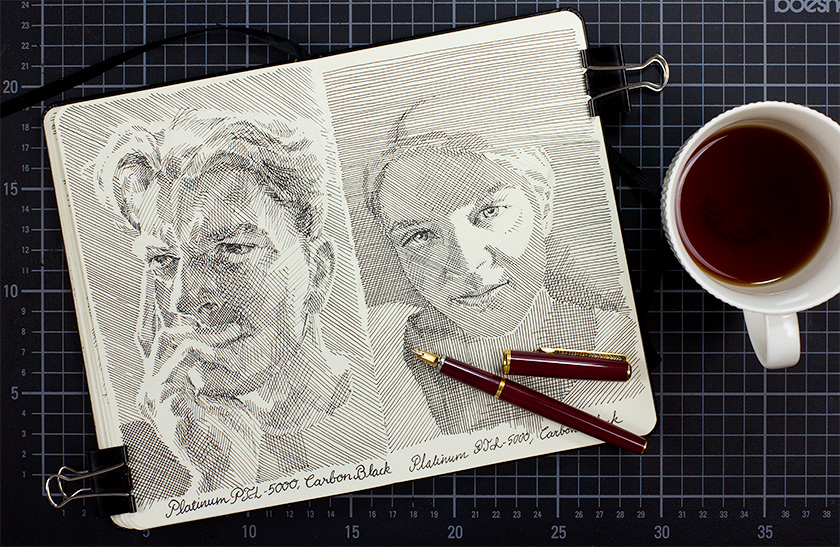
I use fountain pens for two things - writing and drawing. My background is in art, and it was drawing that pulled me toward fountain pens in the first place. Since then, pens have also become part of my writing life: correspondence, daily notes, journals. So when I test a pen, I'm looking at it from both angles. A pen that writes beautifully but draws awkwardly is only half useful to me.
The pen
The PTL-5000a is a small, slim pen with a restrained design. The one Johan lent me is burgundy red with gold-colored trim - nothing flashy, which suits me fine. It fills via Platinum's own cartridges or their converter.
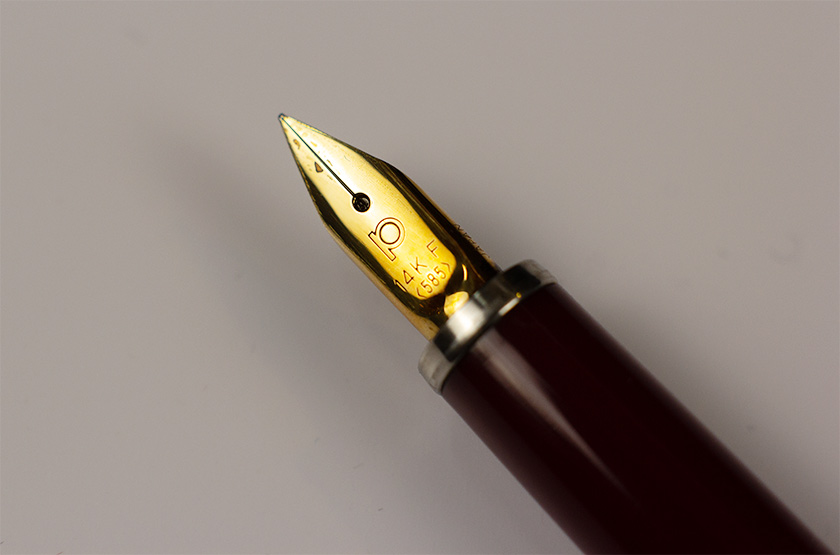
The nib is 14k gold (stamped 585), in a straight, non-flexible shape - similar to the nibs Platinum uses across their lower range. The pen I have here is an F (fine). Without the cap but with the converter, it weighs around 12 grams. Posted, it's about 17 grams and a comfortable length.
The one feature worth calling out is Platinum's slip-and-seal cap mechanism. An inner cap creates an airtight seal when the pen is closed, which keeps ink from drying out for a surprisingly long time - Platinum claims up to a year. For everyday writing pens, this is a nice convenience. For drawing with pigmented inks, it's more than that - it's the reason you can trust this pen with Platinum Carbon Black without worrying about clogging every time you set it down.
Writing with it
The obvious question first: does the gold nib make a difference?
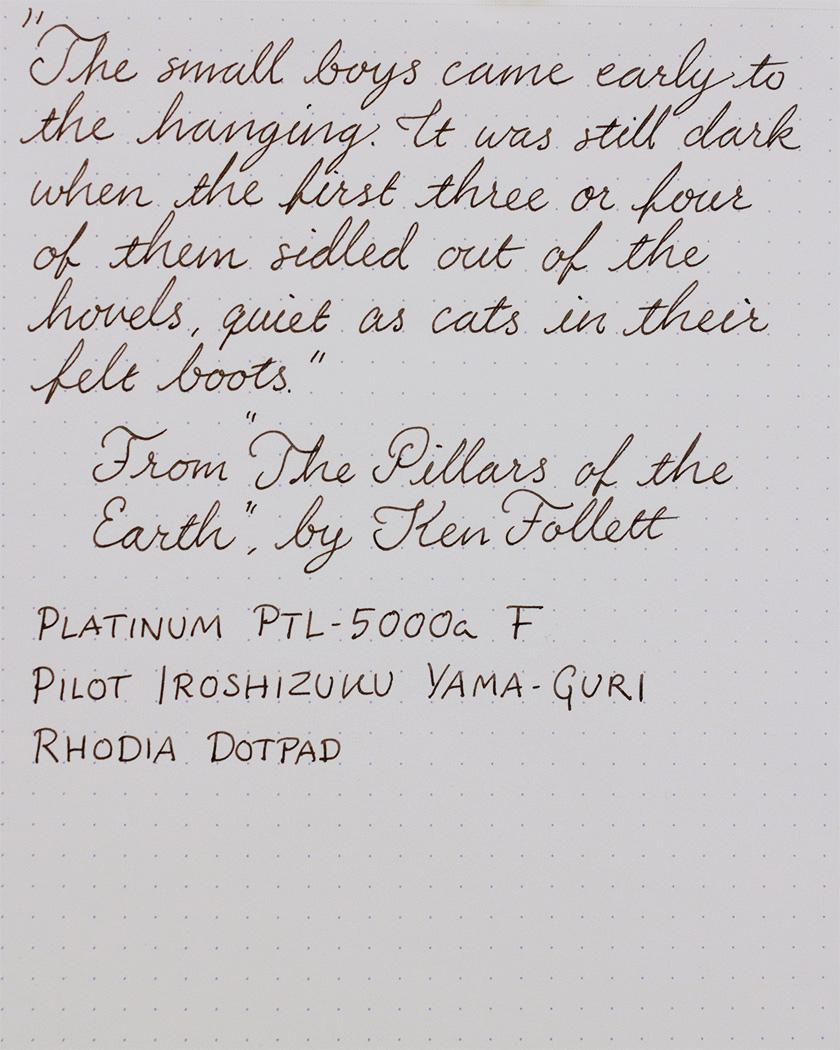
There's feedback when I write - a slight toothiness on the paper that's typical of Platinum pens, and if I press harder, the nib gives a little variation in line width. But I have steel nibs that do the same. My TWSBI 580 with an EF steel nib produces a comparable line width and similar variation. The PTL-5000a feels slightly softer underhand, but not dramatically so.
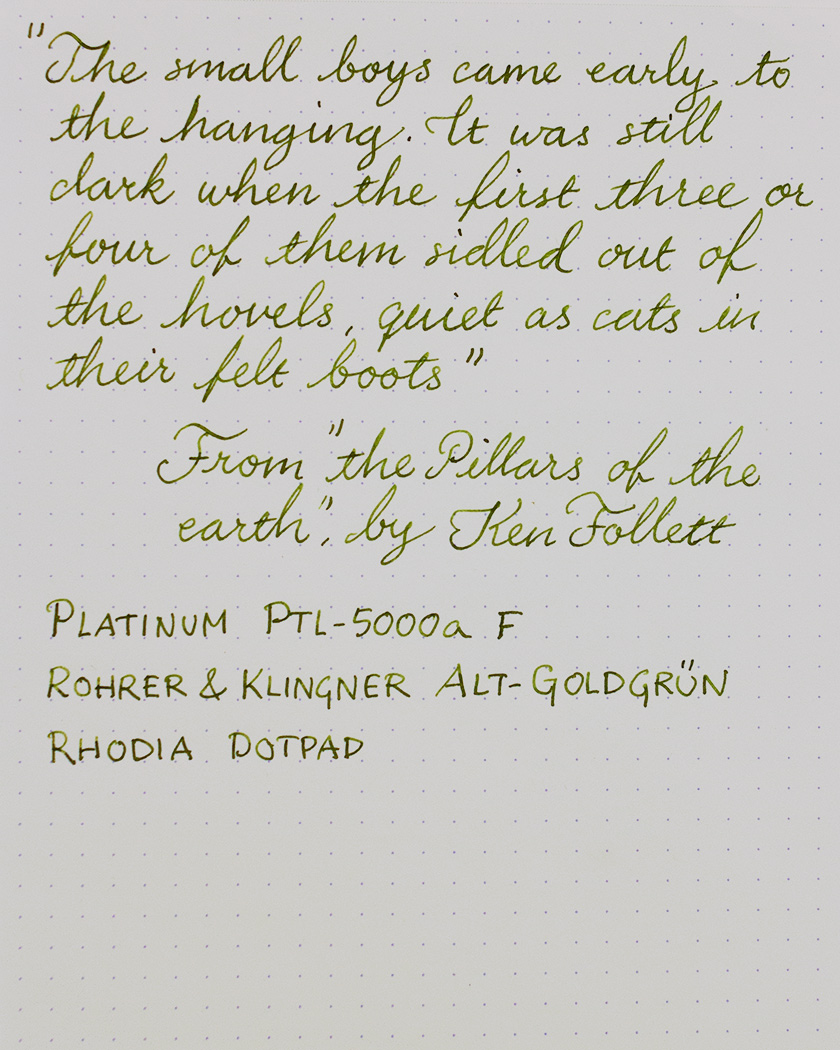
This is not a flex nib. Not even close. My Mabie Todd Swan from the 1920s has a gold nib of similar size and delivers real line variation - the kind where the stroke breathes with the pressure you apply. The PTL-5000a doesn't do that. If you're buying this pen hoping the gold nib will give you a different writing experience, you'll be disappointed.
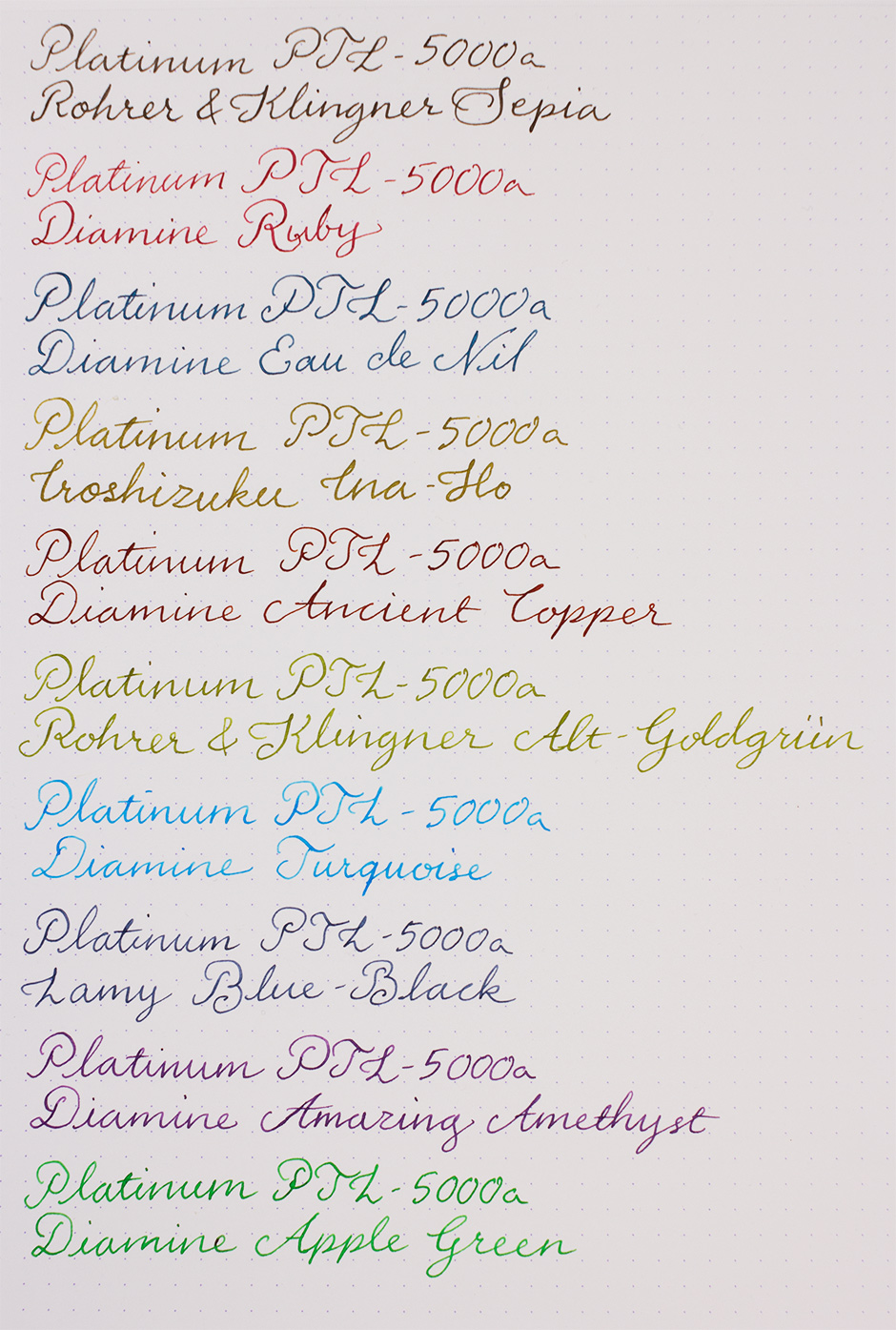
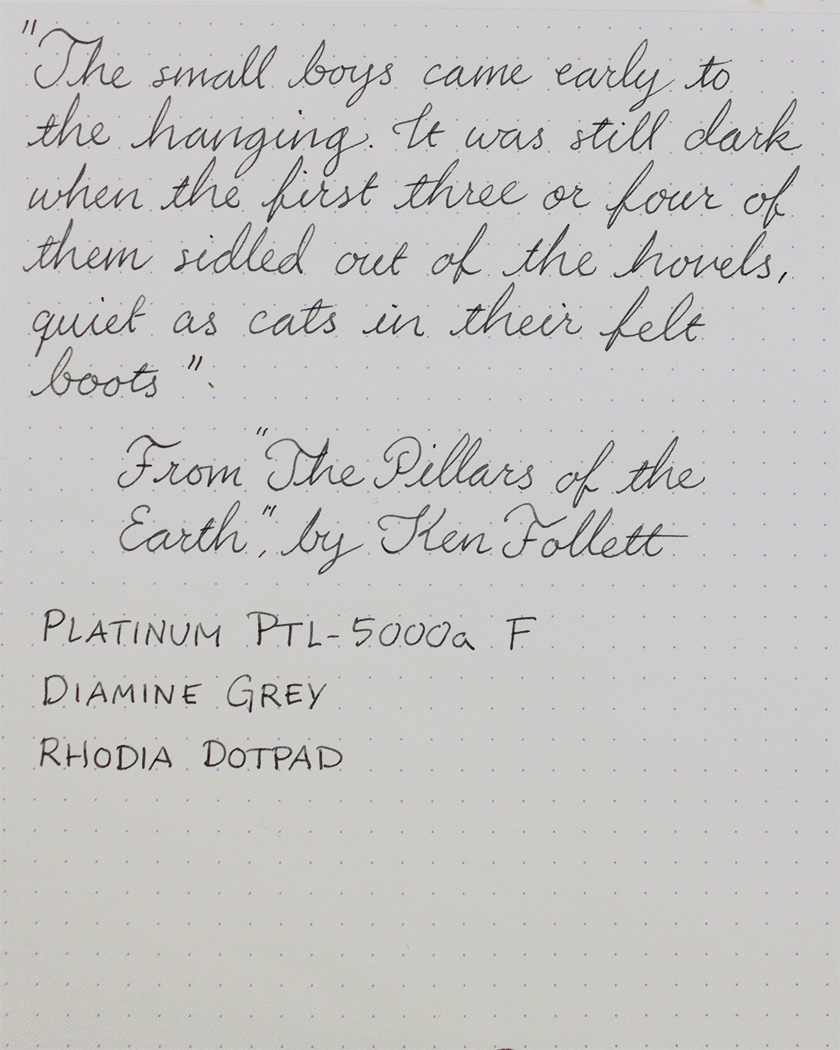
With that settled: writing with the PTL-5000a is perfectly fine. It moves across the page without complaint, and ink flow is consistent - perhaps a touch dry, which keeps shading to a minimum but means the line is clean and controlled. The feedback is a little more pronounced than on my other Platinum pens, though still within normal range.
Drawing with it
When I draw, my grip shifts, my hand moves faster, and I angle the pen differently than when writing. These things reveal qualities - and problems - that a writing test won't show.

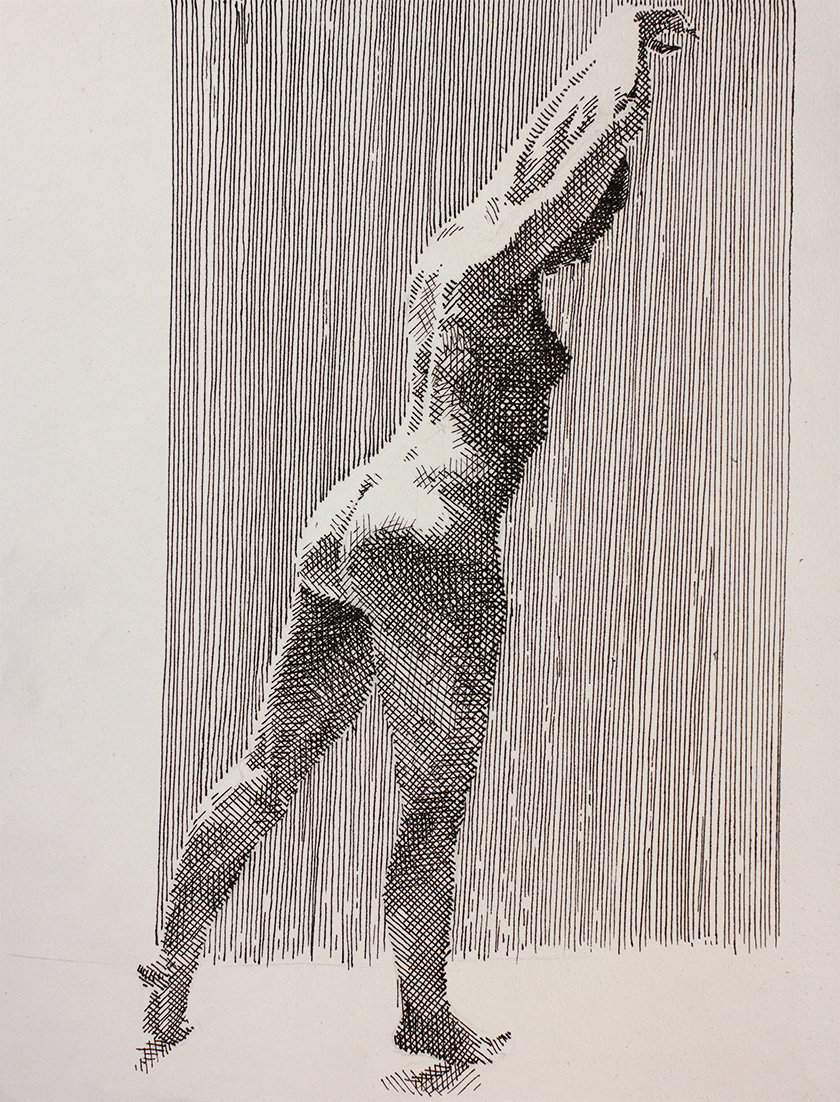
For drawings meant to last - work that will be painted over, sold, or archived - I use Platinum Carbon Black. It's pigmented, waterproof, and lightfast. The only catch is that pigmented ink will dry and clog a pen that sits unused for a few days. That's where Platinum's slip-and-seal cap earns its keep. I've left Carbon Black in Platinum pens for weeks and started writing again without any issues. No other brand I own handles this as reliably.

The problem is that when I draw with the PTL-5000a, I never quite feel in control. The pen is small and light, and the nib - neither springy nor firm - doesn't give me the tactile feedback I want when making fast, long strokes. I have other pens that are just as small and that work fine for drawing. Something about the combination of this body and this nib doesn't come together for me.
Conclusion
There's nothing wrong with the Platinum PTL-5000a. It writes reliably, handles Carbon Black without protest, and the slip-and-seal cap is genuinely useful. But it didn't agree with me - particularly not for drawing, where I want a pen that feels like an extension of my hand rather than something I'm managing.
And the gold nib? It's not the reason to buy this pen. If a cheap entry to gold nibs is what you're after, you can get a comparable writing experience from a good steel nib at a lower price. What you're really paying for here is a well-made Platinum with their excellent cap mechanism - and that's a reasonable thing to pay for, if it matches what you need.